How-to
No C-Wire? Check the Thermostat’s Power and Adapter Requirements
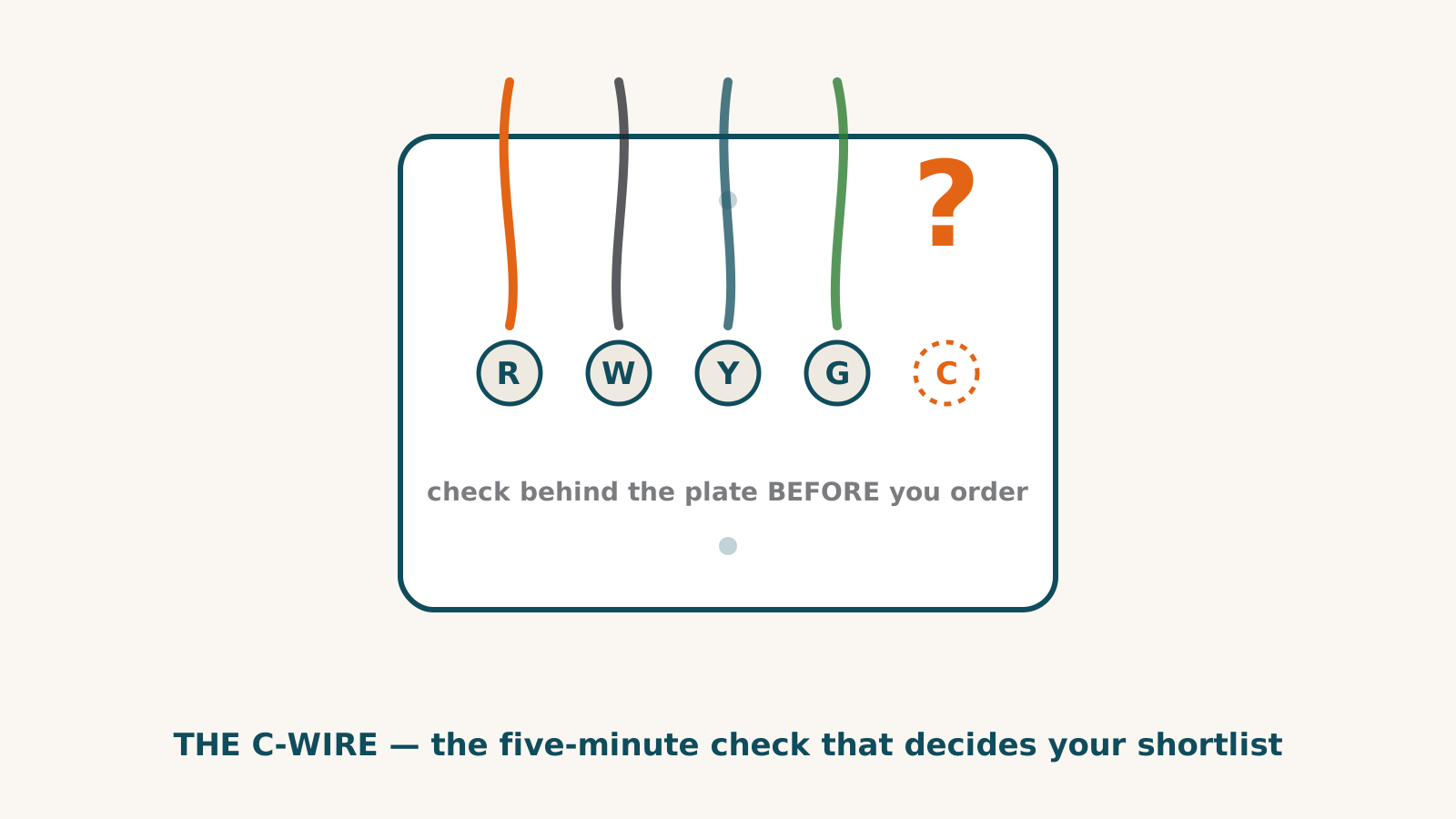
Without a C-wire, a smart thermostat may need a supported power adapter or a different installation route. Check the exact thermostat and HVAC system before buying. An included kit or free voucher is not proof that it works with your wiring.
The table describes dated manufacturer information. It is not an installation procedure or confirmation that your system is compatible.
Compare the documented power routes
| Thermostat | Documented route | Condition to check |
|---|---|---|
| Nest Learning 4th generation | Google Home setup checks whether a C-wire is needed; Google references a Nest Power Connector route | Follow the model-specific power check and equipment compatibility requirements |
| ecobee Premium | C-wire or included Power Extender Kit | PEK is installed at the HVAC equipment, with system exclusions |
| ecobee Essential | C-wire or separately sold PEK | Kit is not included; confirm the exact installation |
| Amazon Smart Thermostat | C-wire or separately sold adapter | Check the maker’s compatible systems and adapter instructions |
| Honeywell X8S | C-wire; included voucher for a free adapter | The documented adapter condition requires both Y and G connected at the old thermostat |
| Honeywell X2S | Hardwired 24VAC | X8S/X8Q voucher wording does not name X2S; do not infer the same offer or rule out every adapter |
The discontinued Honeywell T9 included a C-wire adapter in its documented package. That does not establish the contents of a used or remaining-stock listing.
Identify the wiring through the maker’s instructions
Use the exact equipment guide and turn off the required HVAC power before inspecting wiring. A conductor on a terminal marked C is more informative than its colour, but the complete circuit and system still need to be checked.
A spare conductor behind the thermostat may be usable only if its equipment-end connection and suitability are established. Do not treat finding a loose wire as permission to connect it. If the identification or equipment access is unclear, have a qualified installer check it before ordering an adapter.
This is different from opening the old thermostat, moving wires by colour and hoping setup completes. Power adapters can move part of the job to the furnace or air handler. An advertised DIY thermostat does not establish that every installation stays at the wall.
Keep support claims narrow
Google’s C-wire help explicitly names Nest Learning 4th generation for the setup power check. Other Power Connector statements have their own model and offer conditions; do not promise a free connector or a universal no-C-wire installation from the general explainer alone.
A previous version of this guide said X8S had no adapter path. The correction recorded on 7 August 2026 remains: Resideo documents the conditional voucher. It is different from an adapter physically supplied in the box.
Power Extender Kit availability on an accessory page also does not mean it ships with every ecobee. Premium includes it; Essential does not. Compare the package and adapter compatibility separately.
Finish the buying checks
Confirm voltage, equipment type, stages, power route and installation work with the maker’s compatibility tools. Then count the thermostat, adapter and any professional work in the setup cost. Do not assume a fixed installation time or a universal extra-dollar amount.
Our installation guide explains the documented DIY and professional routes. The thermostat directory and checker compare platform support; neither certifies HVAC wiring. Read the savings guide before treating the upgrade as a promised bill reduction.
Frequently asked questions
What is a C-wire?
In these low-voltage systems, the common wire completes the circuit for constant thermostat power. Identify terminals using the exact equipment instructions; wire colour alone does not establish the connection.
Does an unused wire behind the wall solve it?
Not by itself. Its connection at the HVAC equipment and suitability must be established. Do not connect an unknown conductor based only on its colour or location.
Which examples include a power adapter?
ecobee Premium includes a Power Extender Kit. X8S includes a free-adapter voucher under a documented Y-and-G wiring condition. Essential and Amazon’s thermostat sell their adapters separately; X2S’s equivalent voucher is unconfirmed.
Can every adapter work with every system?
No. Check the exact adapter’s exclusions and installation instructions. ecobee’s PEK excludes millivolt, high-voltage, dual-transformer and fan-coil/communicating systems in the cited record.
Sources for this guide· 6 product records
Product facts come from the linked research records; other cited sources appear below. Read each claim with its source date and any stated limit. Prices, features and support can change after a check. These are research profiles, not hands-on reviews.Report a correction if a source now gives a different answer.
- Google Nest Learning Thermostat (4th gen) — record last verified 2026-10-15 · 81 sources, cited in full on its profile
- ecobee Smart Thermostat Premium — record last verified 2026-10-03 · 53 sources, cited in full on its profile
- ecobee Smart Thermostat Essential — record last verified 2026-10-09 · 59 sources, cited in full on its profile
- Amazon Smart Thermostat — record last verified 2026-09-30 · 29 sources, cited in full on its profile
- Honeywell Home X8S Smart Thermostat — record last verified 2026-09-01 · 30 sources, cited in full on its profile
- Honeywell Home X2S Smart Thermostat — record last verified 2026-09-27 · 42 sources, cited in full on its profile